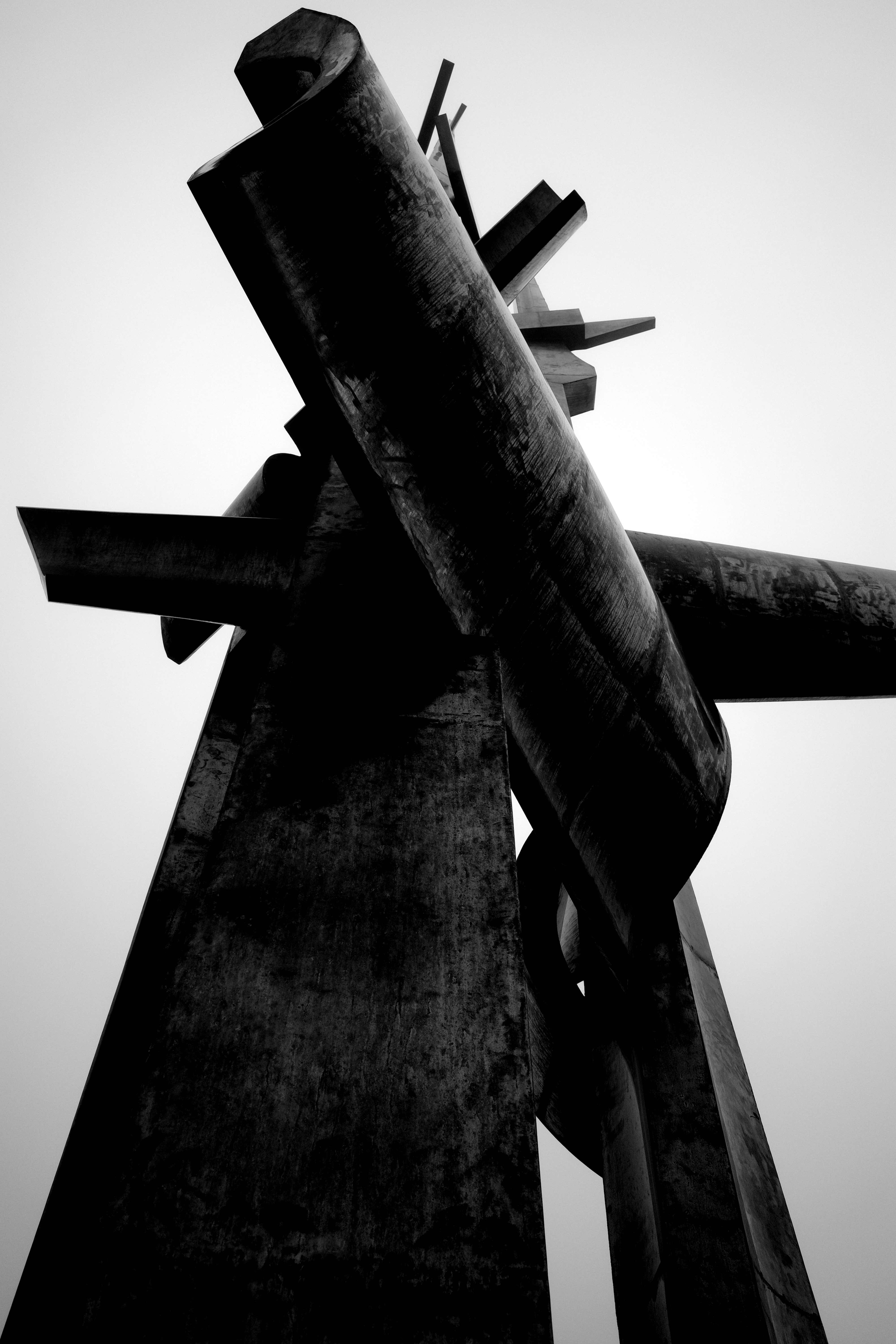
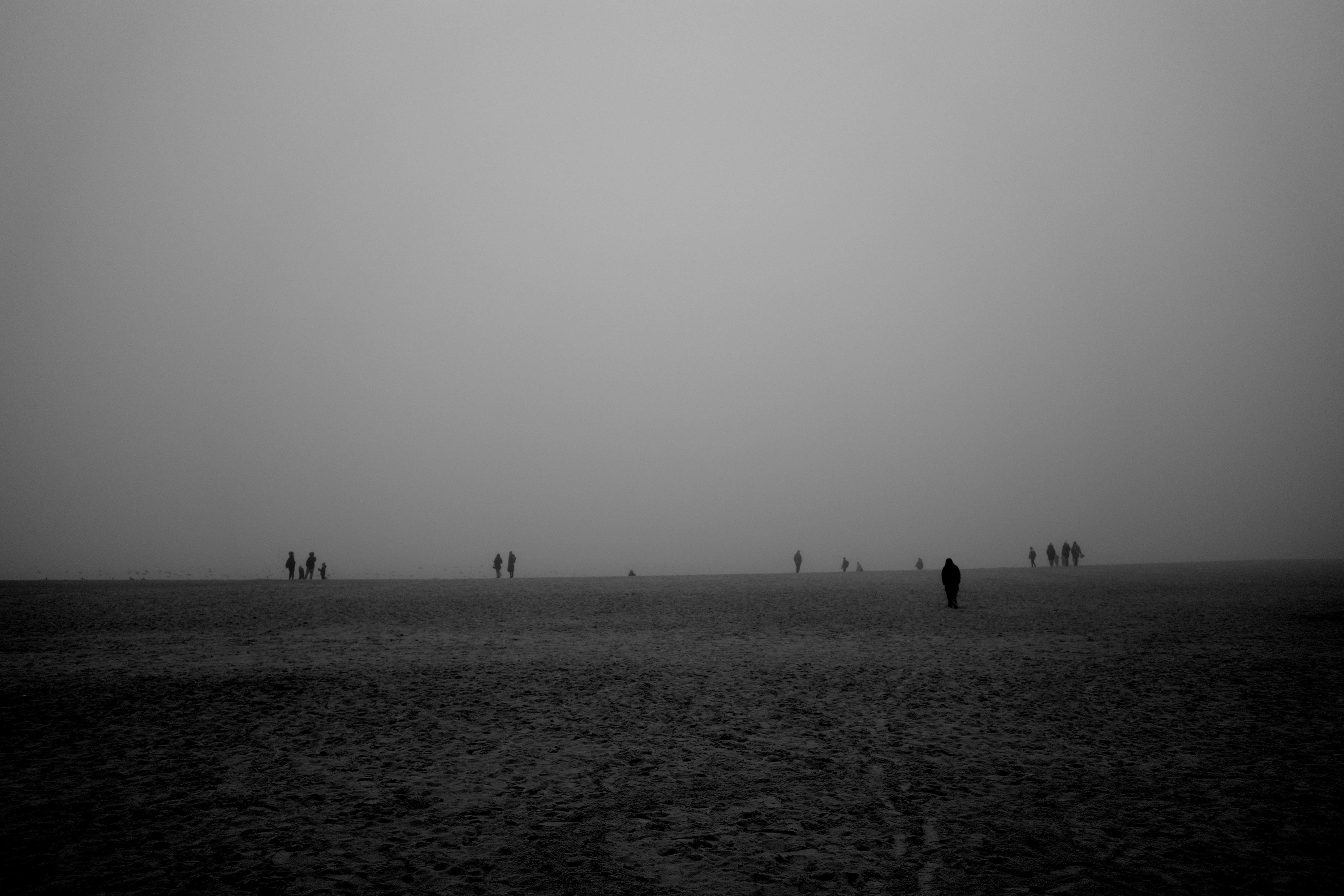
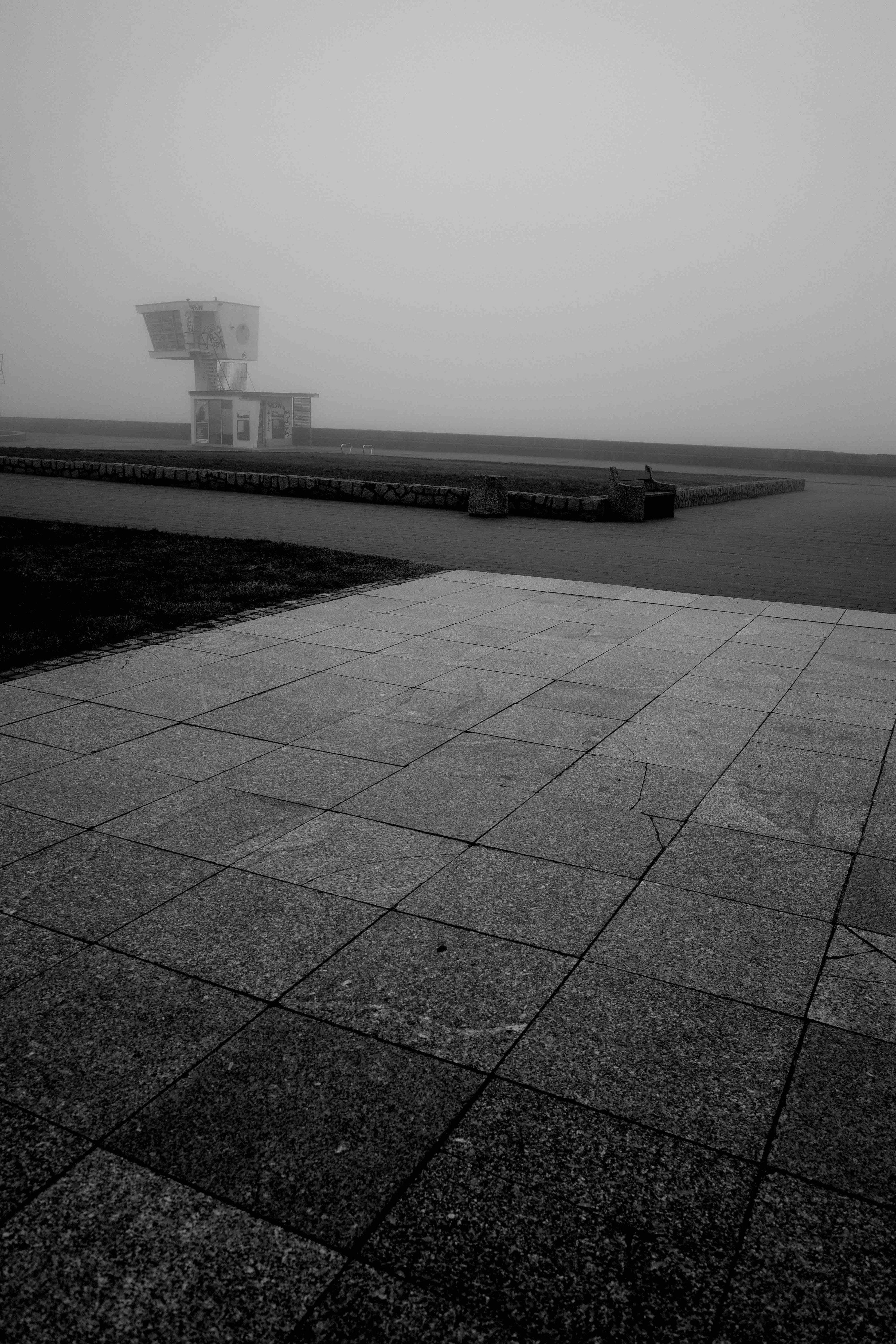
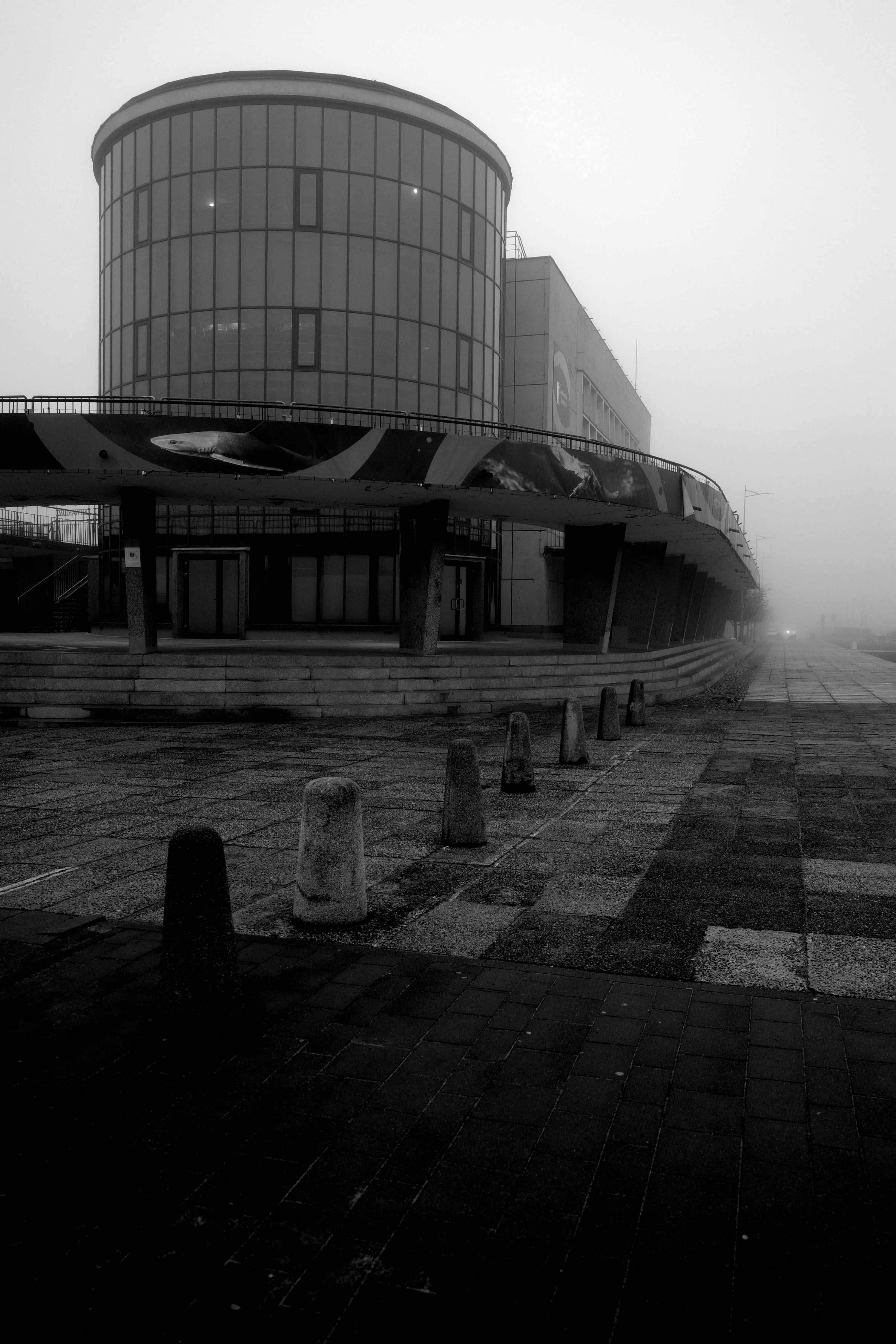
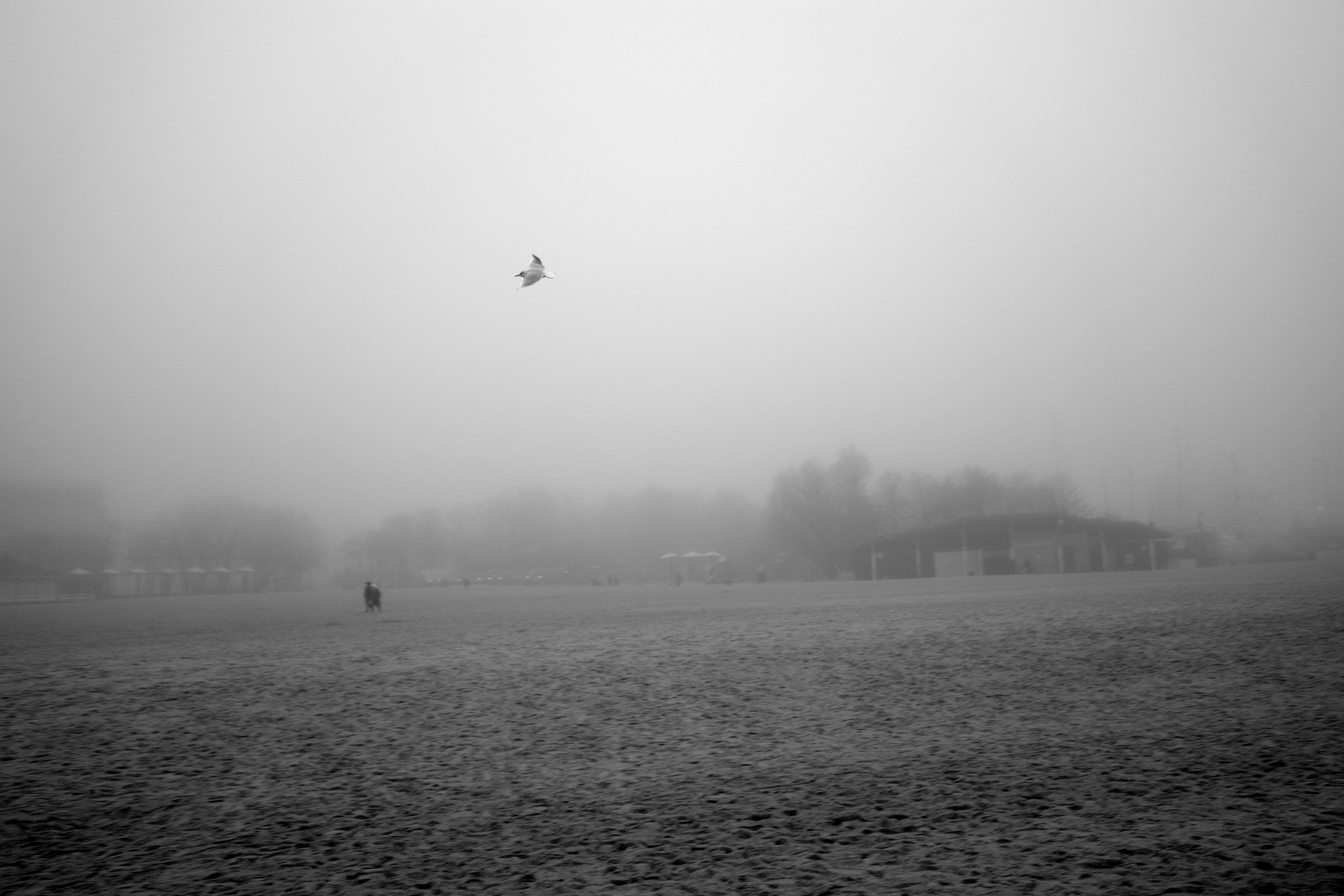
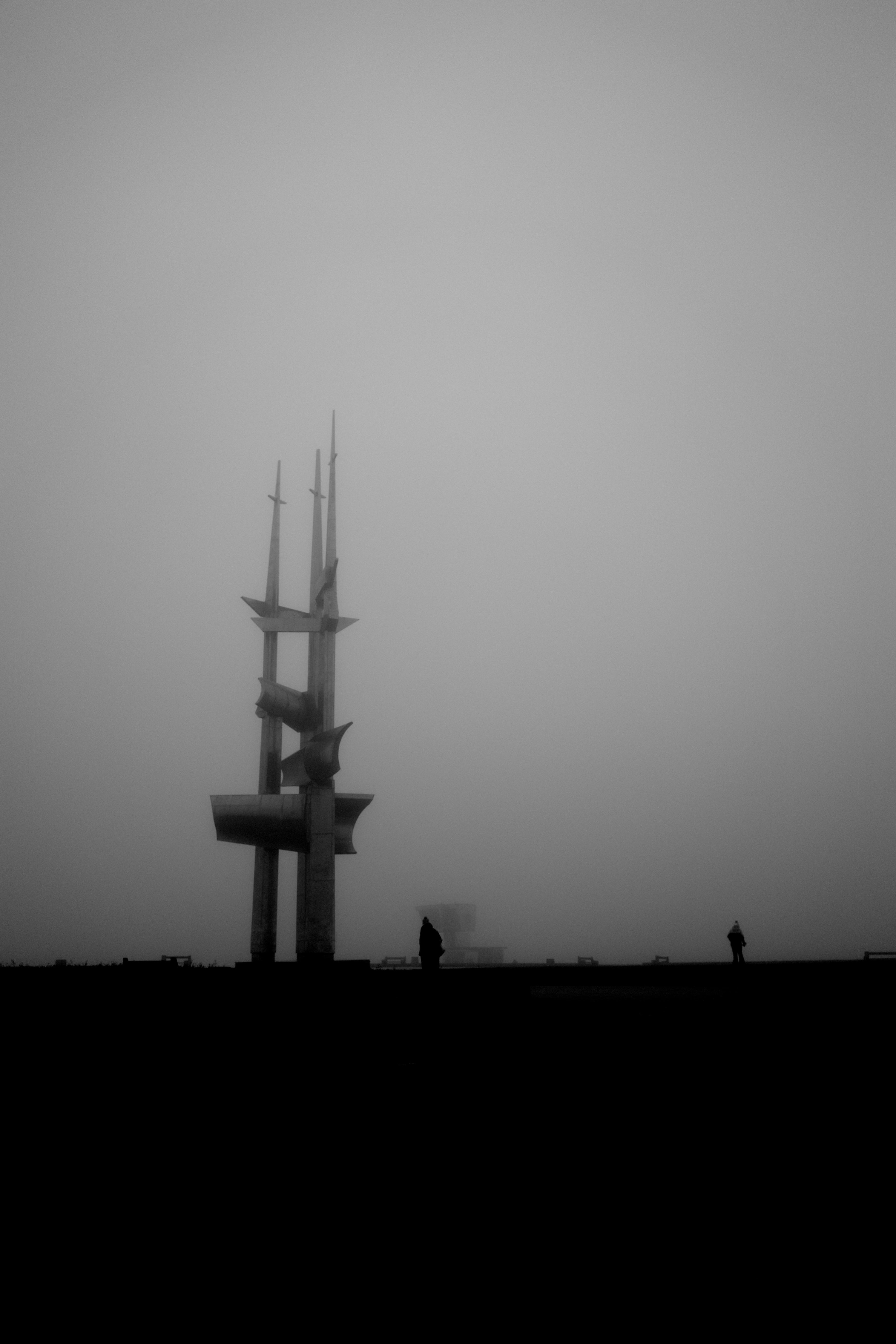
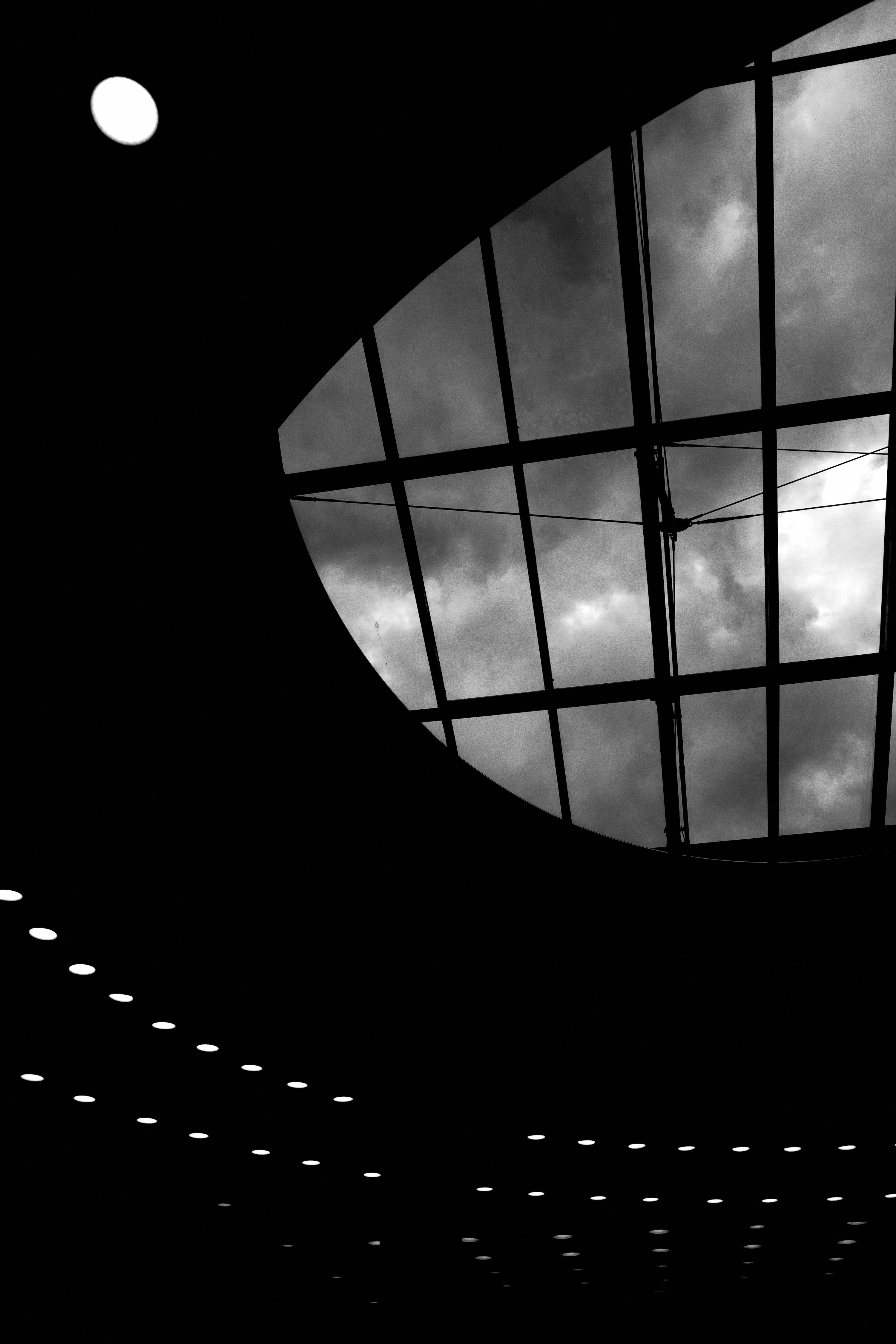
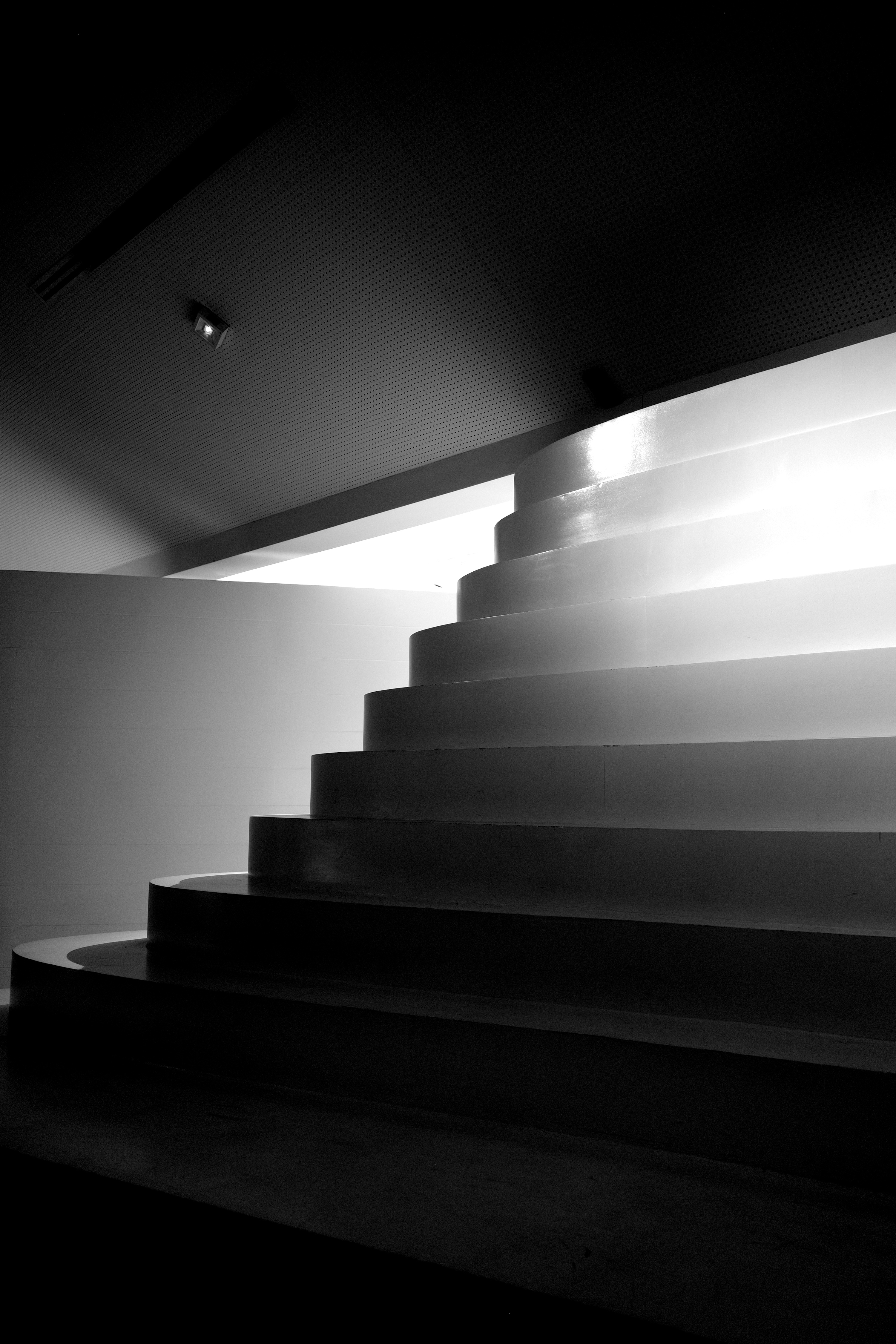
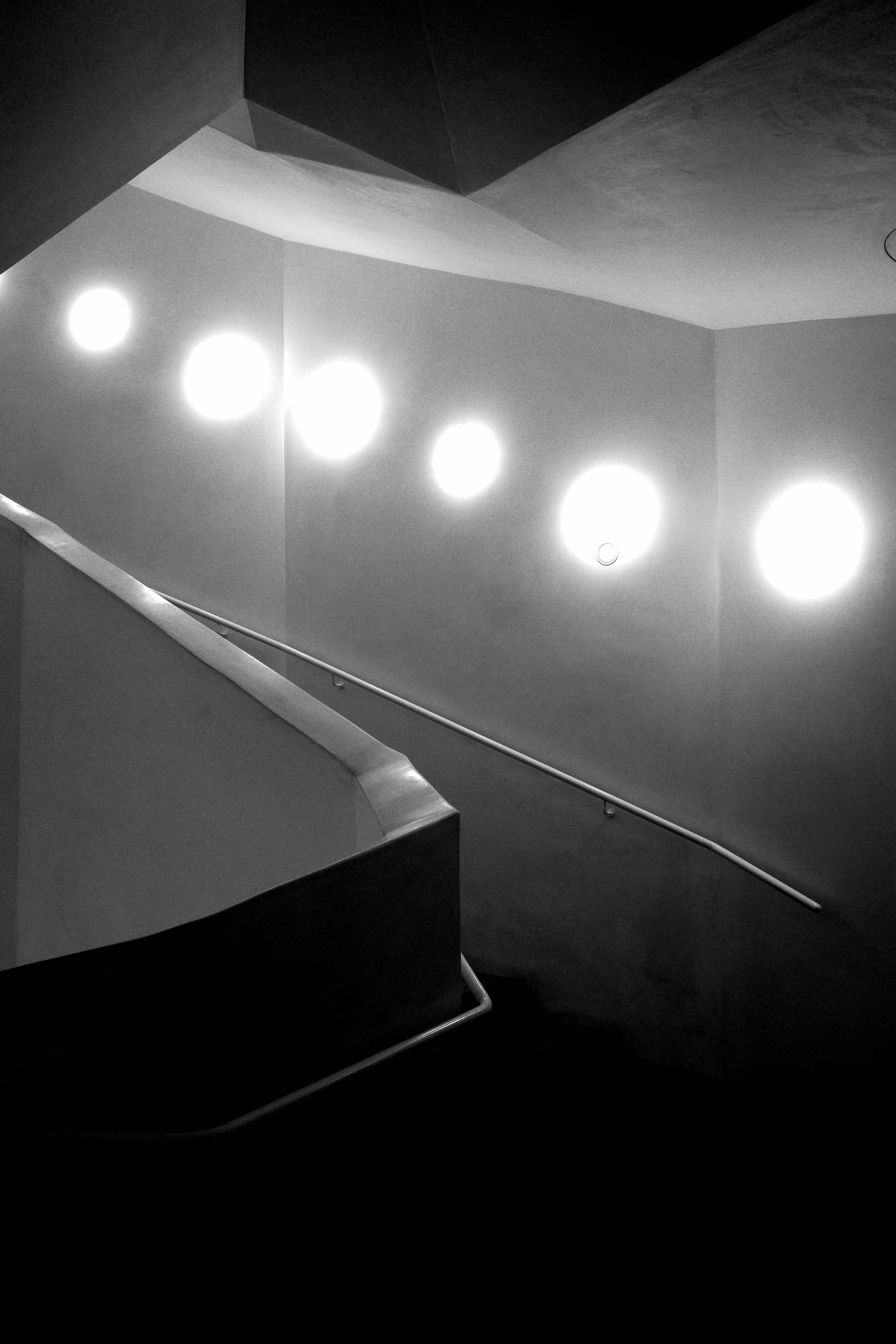
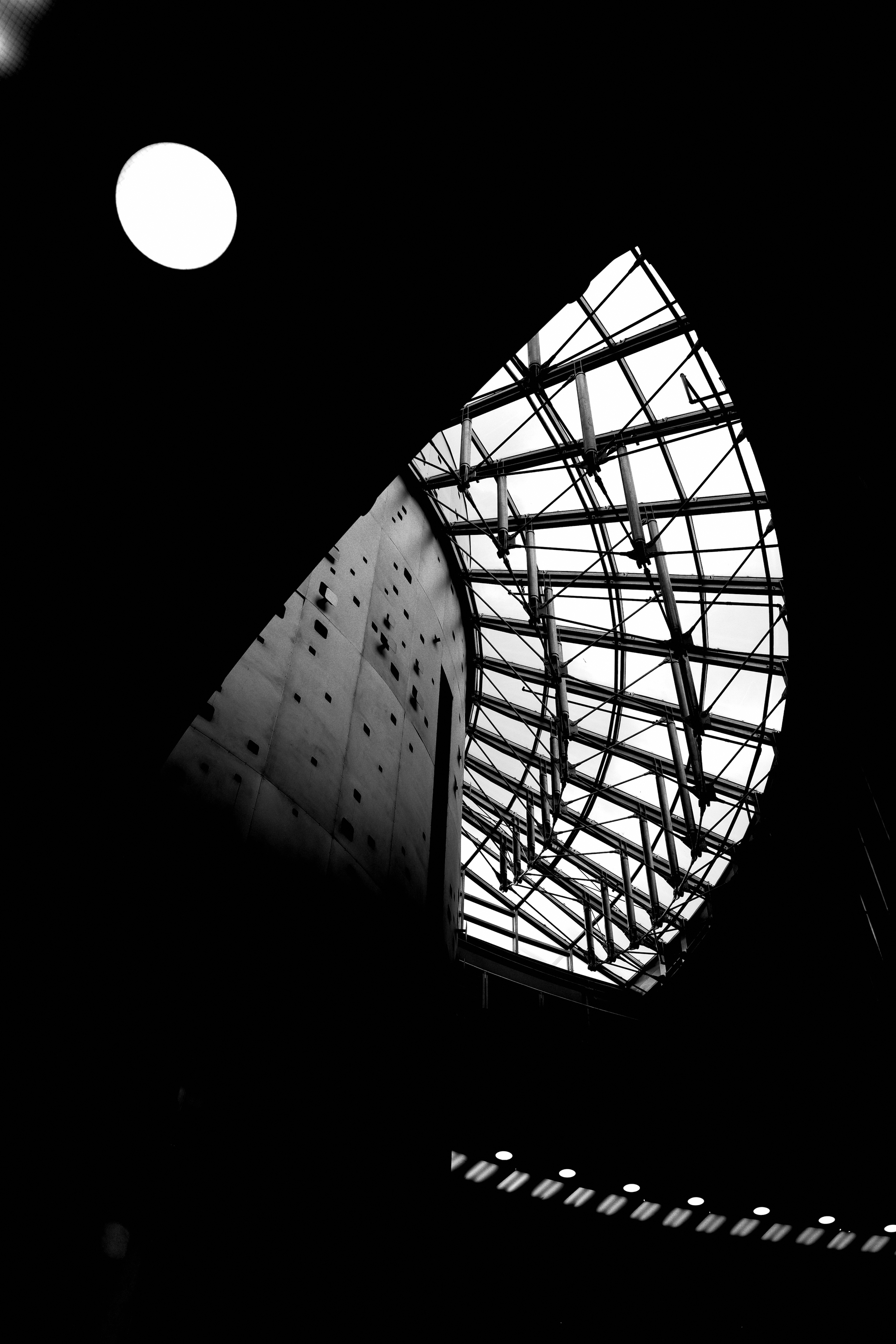
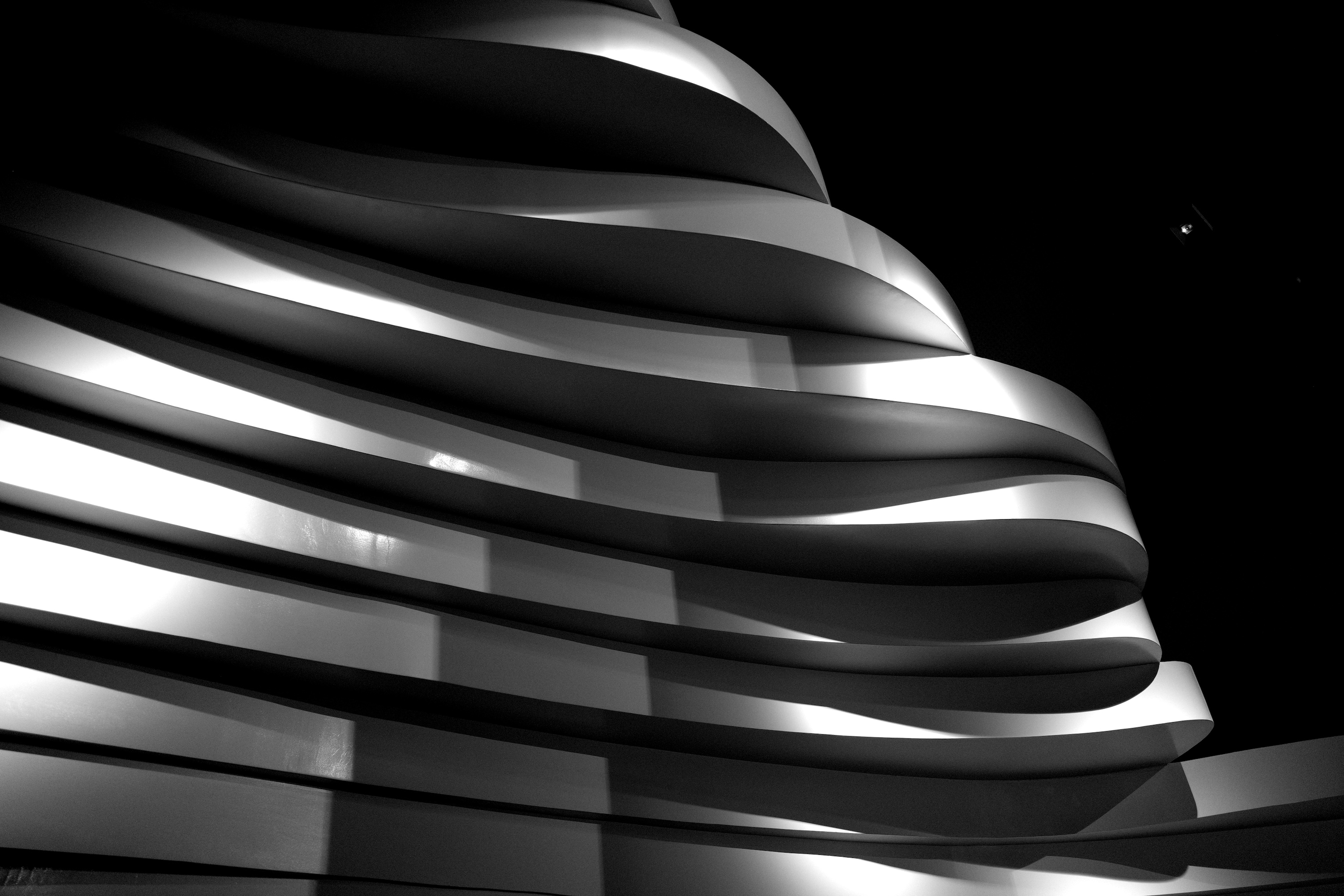
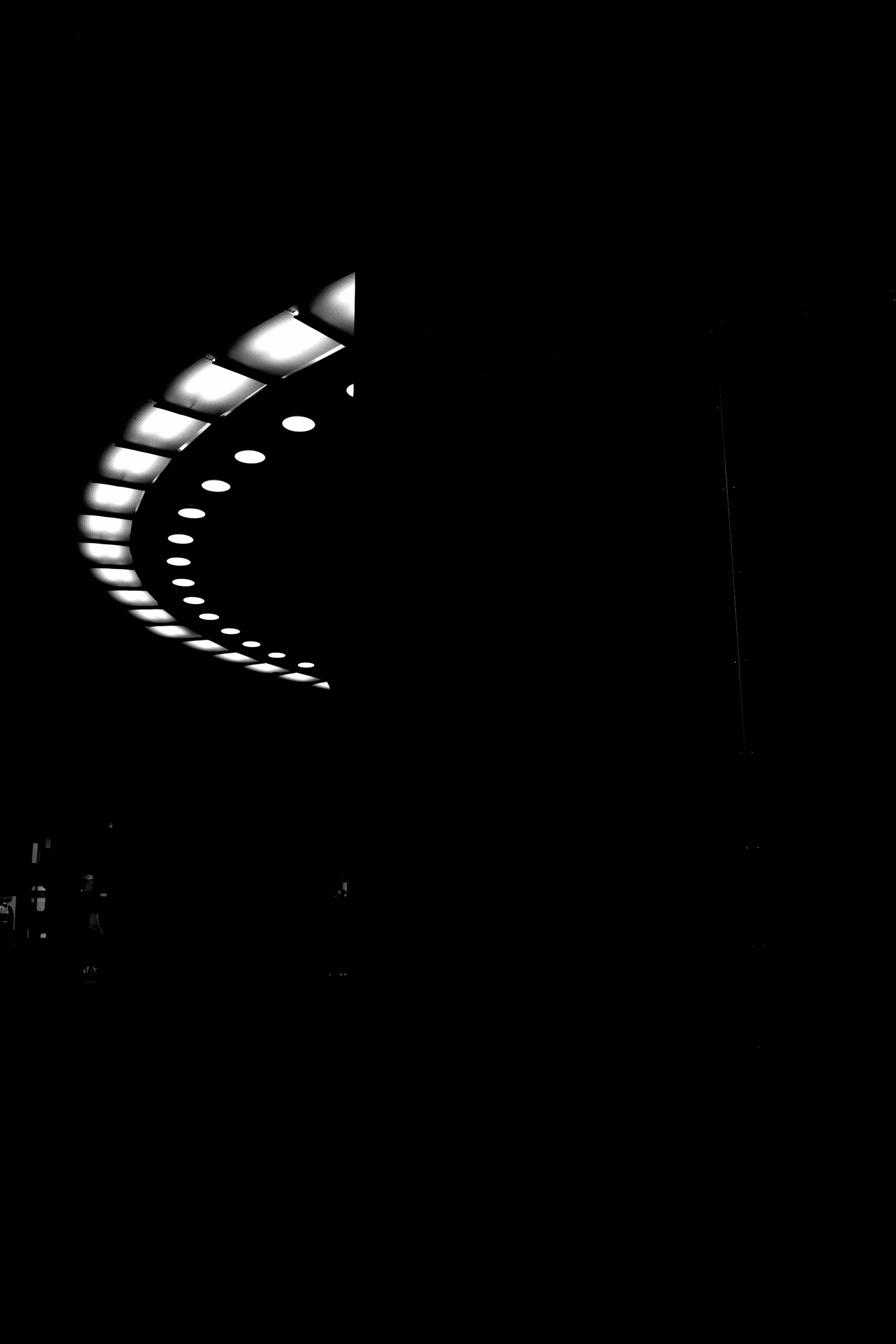
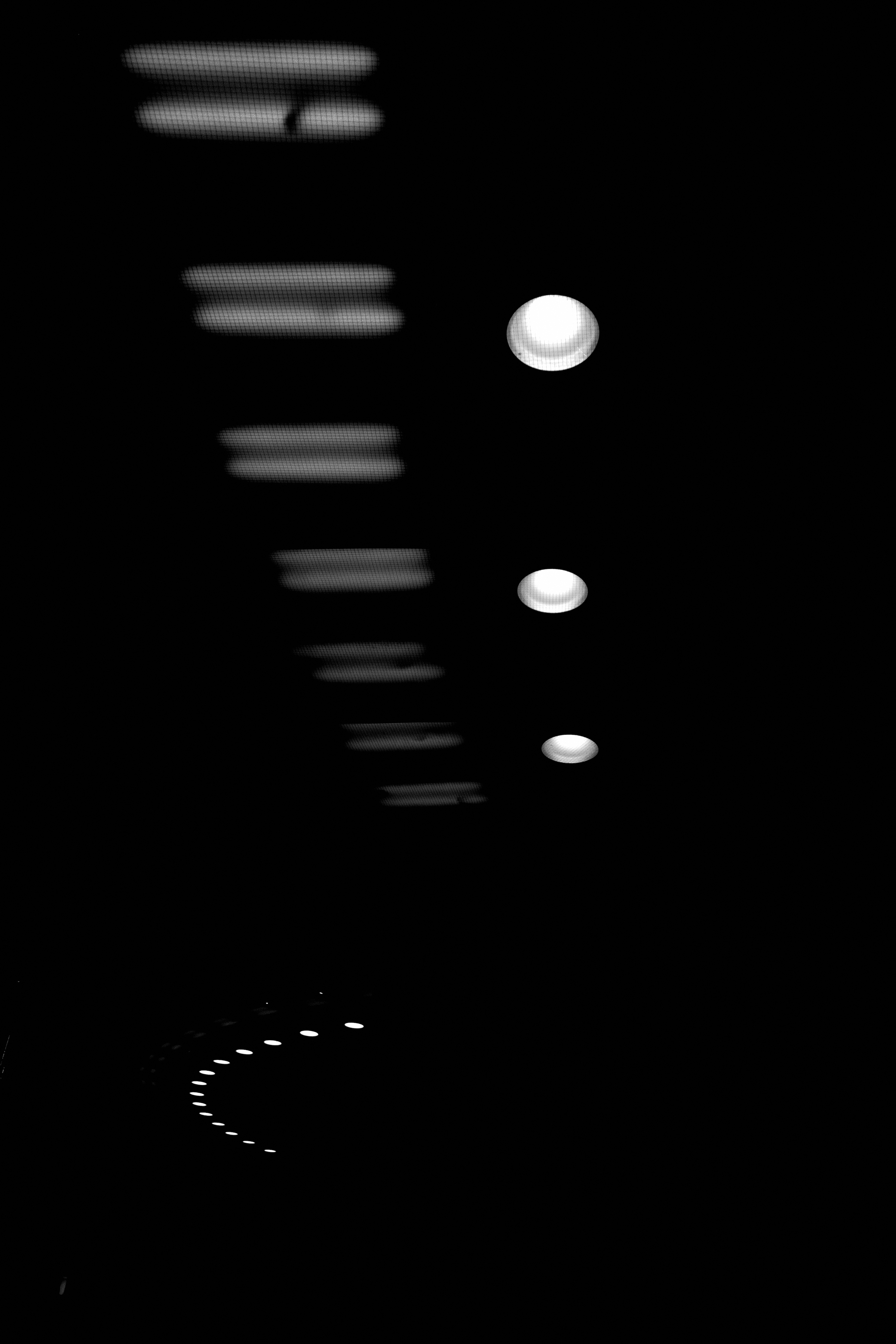
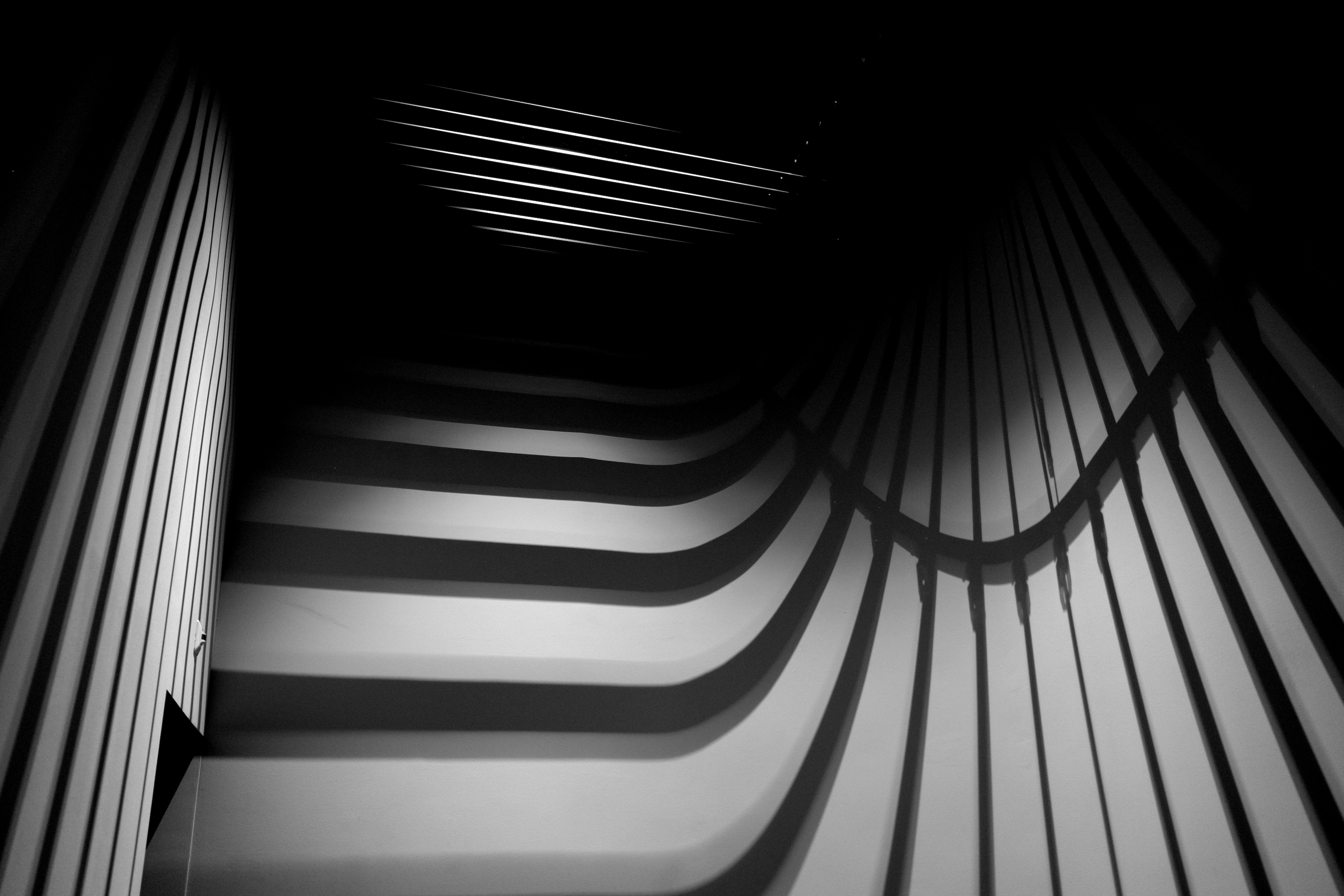
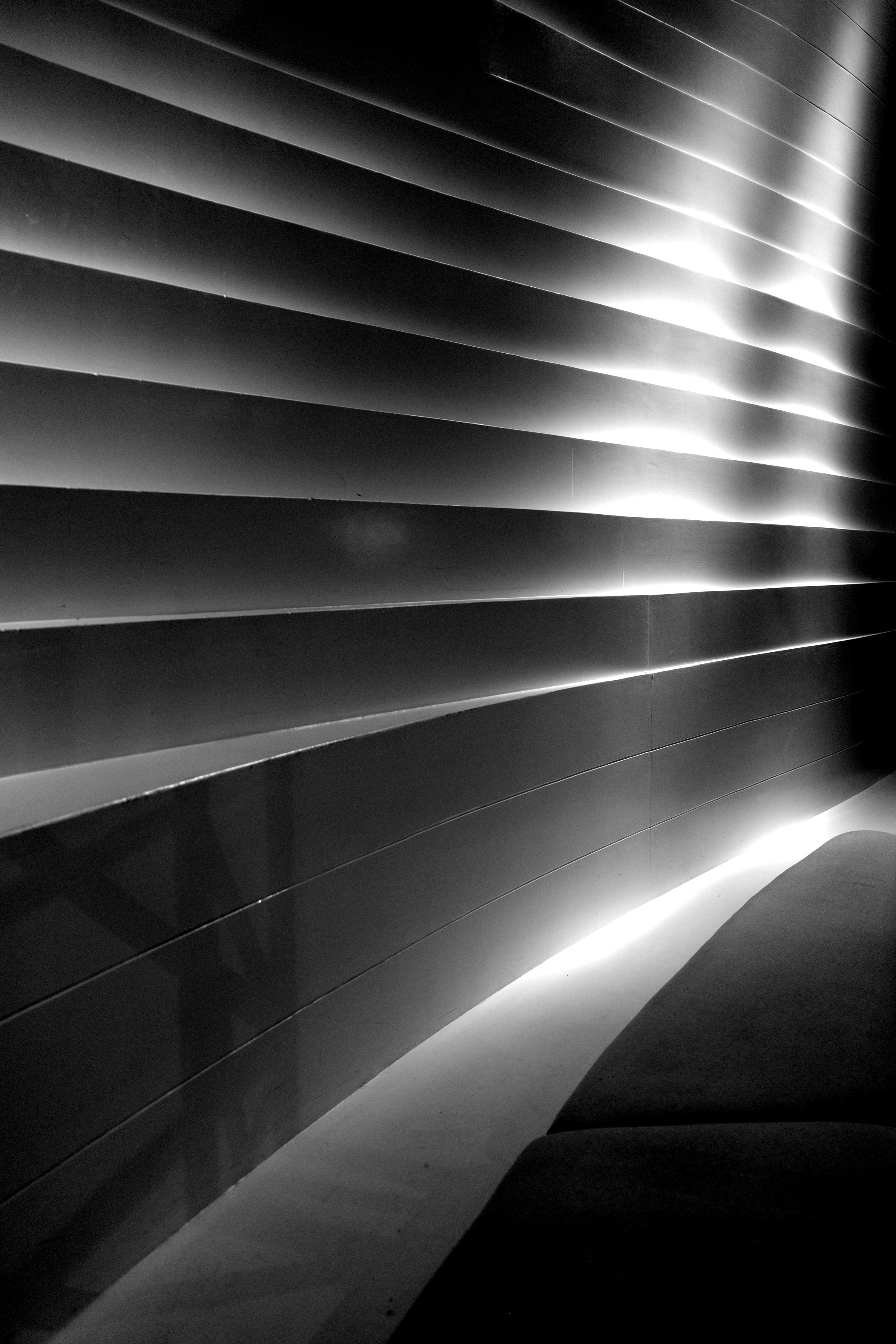
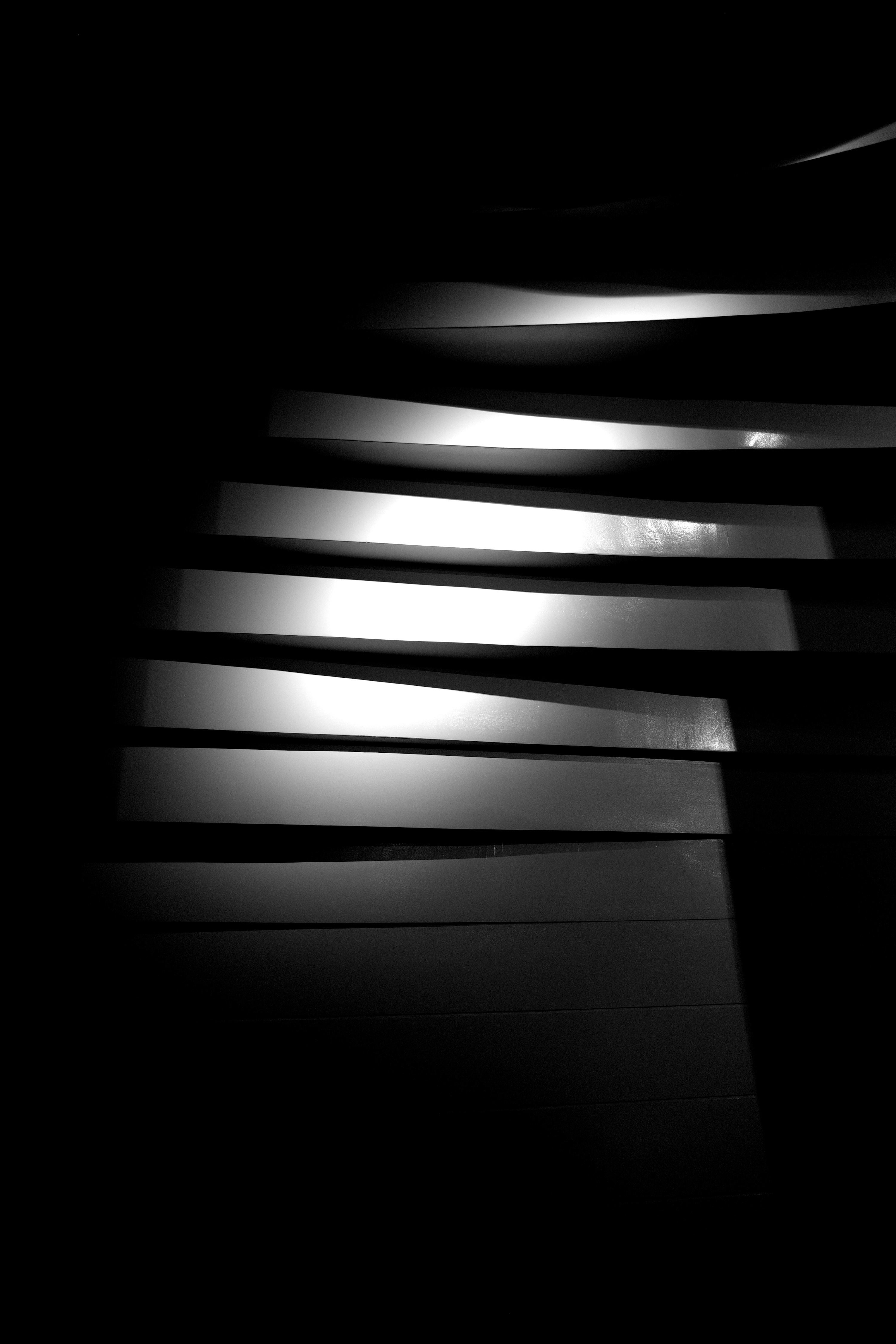
These photographs were made in two buildings in Poland. Stary Browar in Poznan, a 19th century industrial brewery transformed into a contemporary cultural centre, and the Emigration Museum in Gdynia, housed in a restored 1930s maritime station that once served as the departure point for millions of Polish emigrants. Both are spaces defined by the memory of human presence and movement. Both were photographed in its absence.
No people appear in this series. There are no figures, no movement, no evidence of occupation. These are spaces caught in the intervals between human presence, corridors and staircases and facades suspended in a moment of pure formal existence, indifferent to whoever might pass through them. Absence here is not emptiness but presence of a different kind: the evidence of a space that continues to exist, and to have meaning, independently of the people who move through it.
The series begins in legible space. A vast arched window frames storm clouds. A staircase catches raking light along its edge. Globe lights burn against pale walls. These are recognisable places, interior volumes with depth, shadow, and architectural intention. But the series does not stay there.
Moving through the images, the work progressively strips away spatial context until what remains is pure form: repeating curves of light disappearing into black, geometric bands dissolving at their edges, patterns of illumination that have lost their architectural origin. The buildings that generated these images are no longer visible by the end. What remains is the logic of light itself, its tendency toward repetition, geometry, and order, set against a darkness that absorbs everything light does not touch.
In this way the series treats space as an active infrastructure of signs. A maritime station built for departure. A brewery rebuilt for culture. Both continue to organise light, to shape shadow, to impose meaning on the air inside them, long after the last visitor has left and before the next one arrives.